If We Don't Standardize Tattoo Education Soon, Someone Else Will
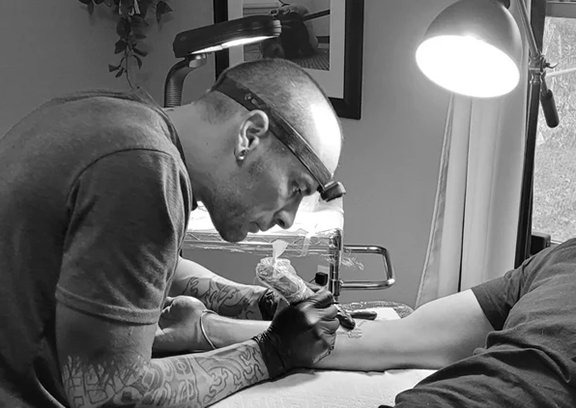
For generations, tattooing has relied heavily on apprenticeship, mentorship, and knowledge passed directly from one tattoo artist to another. There is tremendous value in that tradition, and it should remain an important part of how tattoo artists are developed. But the lack of consistent educational standards has also created a serious weakness within our profession. One apprentice may receive years of structured education covering art fundamentals, sanitation, skin, equipment, technique, client care, and supervised tattooing, while another may receive little more than observation and trial-and-error. Others enter the profession almost entirely self-taught. As tattooing continues to grow, the question is becoming less about whether tattoo education will eventually become more standardized and more about who will be responsible for creating those standards—the tattoo industry itself, or people outside of it?
If tattoo professionals do not establish reasonable educational expectations themselves, public health departments and other government agencies may eventually feel obligated to do it for us. From their perspective, tattooing is not simply an artistic profession; it is a service that intentionally breaks the skin, involves exposure to blood and bodily fluids, and carries potential risks involving infection, allergic reactions, cross-contamination, and disease transmission. Their responsibility is public safety—not necessarily preserving tattoo culture, apprenticeship traditions, or the realities of running a tattoo studio. Without credible industry-developed educational standards to reference, regulators may be left to determine what constitutes a properly trained tattoo artist on their own. When we leave a vacuum, someone eventually fills it.
Legislators present an even greater concern because legislation can determine not only sanitation requirements but potentially who may tattoo, what education they must complete, how many training hours are required, who is permitted to teach them, and what type of institution may provide that education. A well-intentioned lawmaker may understand the need for consumer protection while having very little understanding of how tattoo artists actually develop their skills. Tattoo education could then be modeled after cosmetology, vocational licensing, medical training, or other professions that do not translate neatly to tattooing. Arbitrary classroom-hour requirements could replace competency. Traditional shops might discover they no longer qualify to train apprentices. Experienced tattoo artists could potentially be required to meet educational rules created by committees containing few—or no—working tattoo professionals. Once these requirements are written into law, changing them can become significantly more difficult than helping shape them beforehand.
Insurance companies can exert pressure in a different but equally powerful way. An insurer does not necessarily need the government to create a regulation before establishing its own requirements for coverage. If claims involving infections, injuries, allergic reactions, or professional negligence increase, insurers may begin asking shops and artists to demonstrate specific training, certifications, documentation, or risk-management procedures before providing coverage—or before providing it at an affordable rate. They could potentially determine which training programs they recognize, what certifications must be maintained, and what procedures must be documented. In that situation, tattoo education begins being shaped not by tattoo artists or even lawmakers, but by actuarial risk. A shop might technically be permitted to operate while discovering that obtaining practical insurance coverage requires meeting a completely different set of private standards.
The greatest long-term danger is therefore not simply "more regulation." It is fragmented regulation created without a unified voice from the tattoo profession. One state may require hundreds of apprenticeship hours. Another may require thousands. One county may emphasize bloodborne pathogen education, while another requires a particular certification or curriculum. Insurance companies may impose another layer of requirements on top of government regulations. Schools and training programs may then design their curriculum around satisfying those requirements rather than around producing competent tattoo artists. The result could become an expensive and confusing collection of rules that measures hours, certificates, and paperwork more effectively than it measures whether someone can actually tattoo safely and competently.
This is why standardizing tattoo education should not mean abandoning apprenticeship or turning tattooing into a conventional college degree. It should mean that the tattoo industry defines its own minimum professional competencies before someone else defines them for us. Experienced tattooers, shop owners, educators, health and safety professionals, manufacturers, and other knowledgeable stakeholders should have a meaningful role in determining what an entry-level tattoo professional needs to know. That foundation could include bloodborne pathogens, aseptic technique, cross-contamination prevention, skin anatomy and wound healing, machine and needle fundamentals, pigment safety, client assessment, informed consent, professional ethics, documentation, aftercare, artistic fundamentals, supervised practical experience, and demonstrated competency. How those skills are taught could still vary enormously between apprenticeships, tattoo schools, studios, and mentors. The standard should define the destination without unnecessarily dictating every road used to reach it.
There is an important distinction between regulation being done to an industry and standards being developed by an industry. Tattooing has reached a point where refusing to discuss education and professional standards may no longer protect its independence; ironically, it may eventually surrender that independence. Public health officials will continue thinking about public safety. Legislators will continue responding to constituent concerns. Insurance companies will continue managing financial risk. None of those institutions are inherently enemies of tattooing, and all can play legitimate roles in protecting the public. But none of them should be expected to understand tattooing as deeply as the professionals who practice it every day. If we want future tattoo education to respect mentorship, artistry, shop culture, practical experience, and the realities of the profession, tattoo artists need to participate in defining those standards before outside institutions are forced to define them in our absence.
The tattoo industry has an opportunity right now to be proactive instead of reactive. Establishing meaningful educational standards does not have to take tattooing away from tattooers; done correctly, it may be one of the best ways to keep the future of tattooing in their hands. We can preserve apprenticeship while improving accountability. We can protect artistic freedom while establishing minimum safety and competency standards. And we can work alongside health departments, legislators, and insurers rather than waiting for those institutions to decide what tattoo education should become. If the tattoo industry does not establish what qualified tattoo education looks like, eventually someone else will—and when that happens, we may have far less control over the outcome.
House of Ink Tattoo Studio invites you to reach out anytime to schedule a consult or make an appointment for your tattoo ritual today: