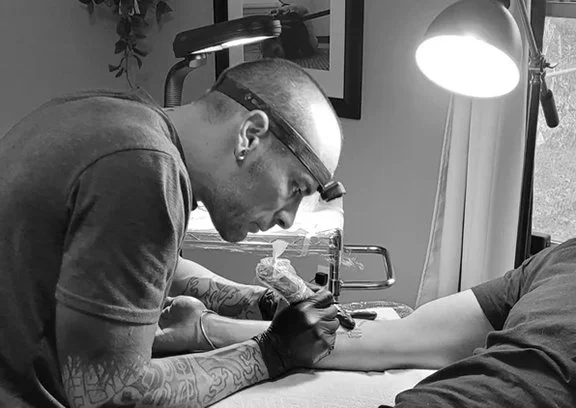
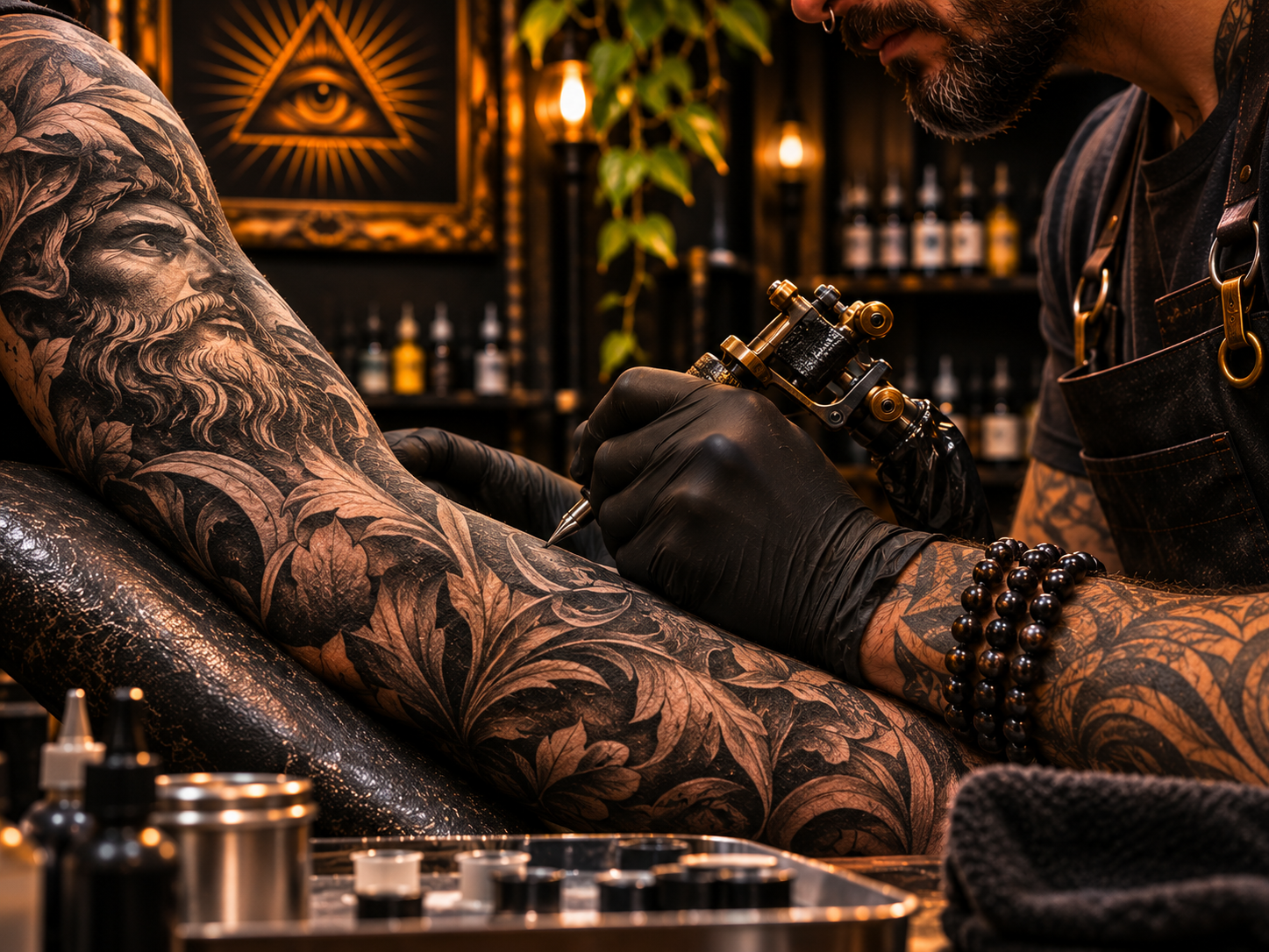
Understanding the time, complexity, and unpredictability behind full sleeves, large-scale tattoo projects, and coverups.
One of the most common questions I receive when discussing a large tattoo project is also one of the most difficult to answer: "How long is this going to take?" It's a perfectly reasonable question. Whether someone is considering a full sleeve, an elaborate back piece, or an extensive coverup, they understandably want to know what they're committing to in terms of time, appointments, and financial investment. And while an experienced tattoo artist can usually provide a reasonable estimate, there's an important distinction between estimating a project and predicting exactly how it will unfold. Large-format tattooing involves an extraordinary number of variables, many of which cannot be fully understood until the work is underway. What may initially appear to be a relatively straightforward composition can reveal unexpected challenges, while another seemingly complicated project may progress more efficiently than anticipated. The difficulty isn't necessarily a lack of experience or planning. It's simply the nature of working on a living, healing, three-dimensional canvas.
A Full Sleeve Is More Than Just a Large Tattoo
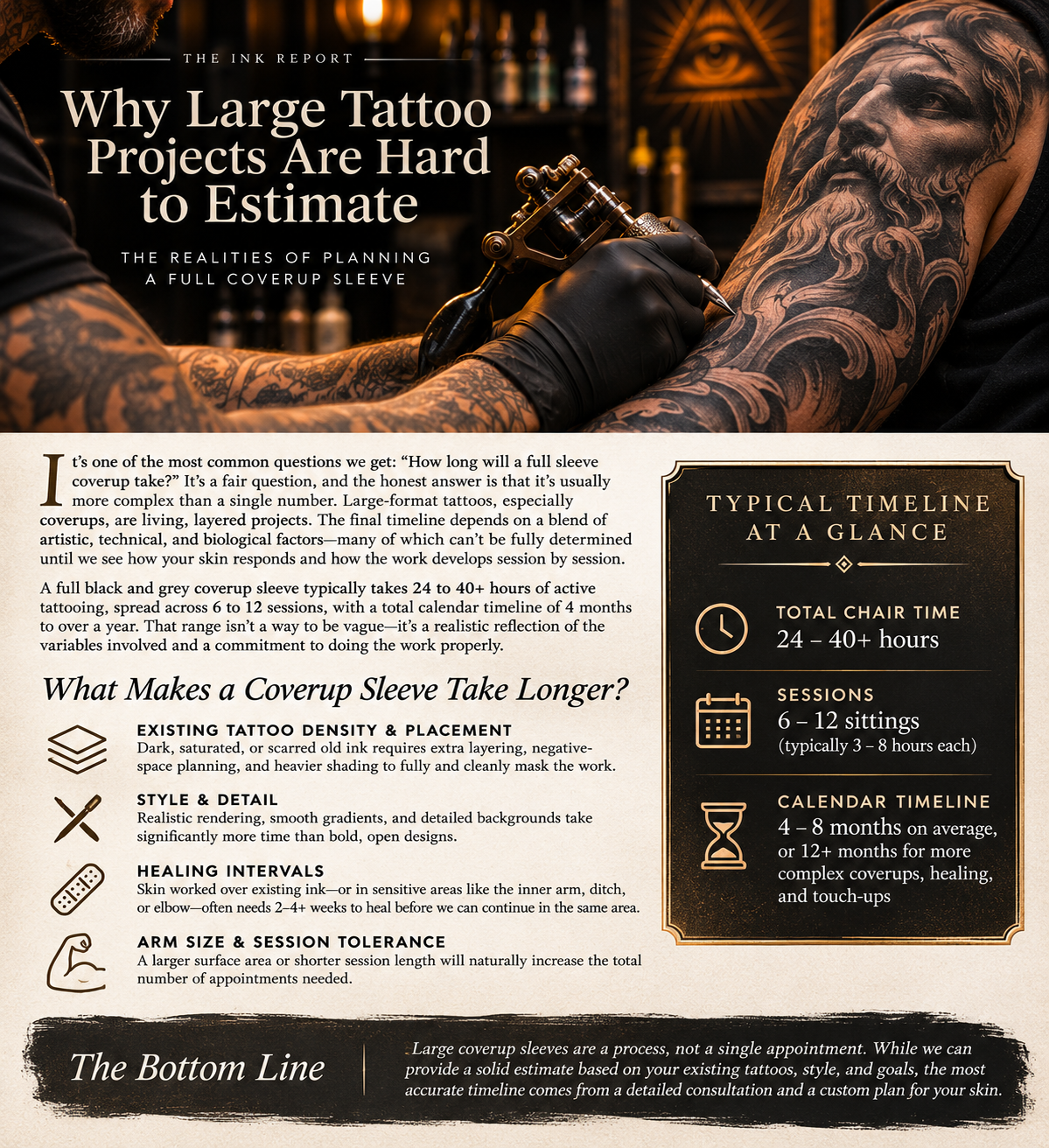
To put things into perspective, a complete black-and-grey sleeve may require approximately 24 to 40 hours or more of active tattooing, commonly distributed across six to twelve sessions. Some projects require considerably longer, particularly those involving intricate realism, dense shading, extensive backgrounds, or complicated coverups. Individual appointments might range from three to eight hours, depending on the artist's working methods, the area being tattooed, and the client's ability to remain comfortable throughout the session. These numbers are useful as broad planning references, but they should never be mistaken for universal standards. Two sleeves covering essentially the same amount of skin can require dramatically different amounts of work. A bold illustrative design incorporating generous negative space may be completed much more efficiently than a highly detailed black-and-grey realism sleeve requiring delicate tonal transitions and meticulous blending. Surface area is only one part of the equation; the density and complexity of the artwork are equally important.
Why Coverups Are Especially Unpredictable
Coverup tattoos introduce another layer of complexity because the artist isn't beginning with a blank canvas. Existing tattoos impose limitations on composition, contrast, placement, and the distribution of light and dark values. A heavily saturated black tattoo cannot simply be concealed beneath a delicate grey wash, and the darkest portions of the original artwork often determine where the strongest shadows or most visually substantial elements of the new design must be placed. In some cases, existing ink can be incorporated into the new composition; in others, it must be strategically disguised through carefully planned shading, texture, and overlapping forms. Scar tissue, uneven pigmentation, and previously overworked skin can introduce additional challenges. Furthermore, a coverup that appears successful immediately after application may reveal areas requiring refinement once the tattoo has fully healed. This doesn't necessarily indicate poor planning or execution. It reflects the reality that tattoo pigments are deposited into living tissue, and the appearance of that tissue changes throughout the healing process. For particularly dark or restrictive existing tattoos, laser lightening before the coverup may sometimes provide a better foundation than attempting to conceal everything with additional ink.
The Variables We Can't Always Predict
Even with a carefully developed design and a thorough consultation, several factors can influence the pace of a large tattoo project. Skin texture, elasticity, sensitivity, and the way an individual's skin responds during tattooing can affect how efficiently an artist is able to work. Some areas of the body are more technically demanding than others. The inner arm, elbow, and elbow ditch, for example, can require additional attention because of their contours, movement, and sensitivity. Client endurance also plays a meaningful role. One person may comfortably sit through a six-hour appointment, while another may find that three or four hours is their practical limit. Neither situation is inherently problematic, but shorter sessions can increase the number of appointments required. The design itself may also evolve as the work progresses. Adjustments to contrast, transitions, background elements, or the relationship between different sections of a sleeve may become necessary to preserve the integrity of the overall composition. Good tattooing requires the flexibility to make those decisions rather than forcing the artwork to conform to an arbitrary schedule.
Tattooing Time and Completion Time Are Two Different Things
Another important distinction is the difference between the number of hours spent tattooing and the total amount of time required to complete the project. A sleeve involving thirty hours of actual tattooing might be distributed across several months, or potentially more than a year. Healing intervals, scheduling availability, financial considerations, and the client's personal commitments all influence the timeline. When returning to the same area of skin, artists commonly allow several weeks of recovery, with additional time when necessary. Complex coverups may benefit from longer intervals so that the artist can accurately evaluate the healed appearance before proceeding. Occasionally, a section that appeared finished during an appointment may require additional refinement after healing. These intervals are not wasted time or unnecessary delays; they're an essential part of working responsibly with the skin. Attempting to accelerate a project by repeatedly working tissue before it has adequately recovered can compromise both the healing process and the final result.
Why an Estimate Should Be a Conversation, Not a Promise
When I provide an estimate for a large tattoo, I'm drawing upon experience, evaluating the proposed artwork, considering the client's existing tattoos and skin, and making an educated projection about the work involved. But I also recognize that some variables will remain unknown until the project progresses. This is particularly true with large coverups, where the interaction between old and new artwork may require decisions that cannot be made confidently in advance. A responsible estimate should therefore establish a reasonable range of expectations rather than create the illusion of certainty. Clients should feel comfortable discussing their budgets, preferred session lengths, scheduling limitations, and overall goals before beginning. Likewise, artists should be transparent when a project presents unusual challenges or when the original estimate may need to be revisited. The objective is not to make every project take longer than expected, nor to avoid accountability for time and cost. It's to create a working relationship built on realistic expectations, open communication, and mutual trust.
The Finished Tattoo Matters More Than the Stopwatch
Ultimately, a large tattoo is a substantial artistic undertaking, not a race toward a predetermined finish line. Whether a sleeve requires twenty-five hours or forty-five, the quality of the final composition should remain the priority. Proper planning, thoughtful execution, adequate healing, and the willingness to make necessary adjustments all contribute to a tattoo that looks cohesive and continues to hold up over time. When someone invests in a full sleeve or an extensive coverup, they're not simply purchasing a certain number of hours with a tattoo machine. They're investing in the artist's judgment, experience, technical ability, and commitment to producing the best possible result within the realities of their skin and the project itself. A good estimate helps us plan the journey. It shouldn't become a limitation on the quality of the destination.
Considering a full sleeve, large-scale tattoo, or coverup? At House of Ink Tattoo Studio in Noblesville, Indiana, we believe every ambitious tattoo begins with a thoughtful consultation, honest expectations, and a design developed around the individual wearing it.
House of Ink Tattoo Studio | Noblesville, Indiana
Explore the art of self-expression at houseofink.studio.
House of Ink Tattoo Studio invites you to reach out anytime to schedule a consult or make an appointment for your tattoo ritual today: